
Okay, so check this out—browser extension wallets changed the game for me. Wow! They make DeFi feel immediate and a little dangerous at the same time. My first impression was: convenient, but risky. Initially I trusted MetaMask because everyone does. Actually, wait—let me rephrase that: I trusted convenience more than security, until a bad UX click almost cost me ETH. Hmm… something felt off about the approval flow and my instinct said “fix this.”
Seriously? The extension popped open with a vague “approve” button. Short, unclear, and my heart skipped. On one hand extensions are the smoothest on-ramps to DEXs and NFTs. On the other hand, they live in the same process as your browser—so supply-chain issues and malicious tab injections are real threats. My gut reaction was to stop using them, though actually I started digging for better options instead.
Here’s what bugs me about most wallets: permission sprawl. Wow! You sign once and suddenly a contract can drain funds later, because you didn’t fully review the allowance. That’s very very common. Initially I thought “revoke after use” was enough, but then I realized that the UI for revoking is often buried or confusing. On reflection, the best wallets nudge users to minimal approvals and show clear transaction intent, not cryptic gas numbers that look like a phone number.
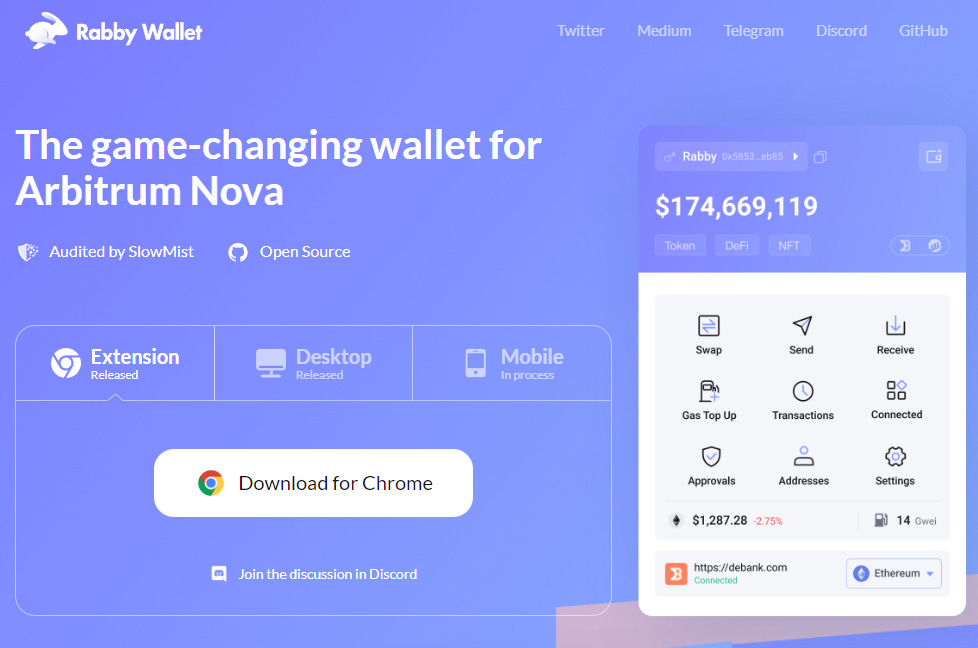
Why a different extension matters
Okay—here’s the practical part. Rabby made me rethink extension wallets because it combines a security-minded flow with features that actually reduce mistakes. Whoa! It isolates permissions per dApp and surfaces allowances in a digestible way. My instinct said “finally,” because the risk of over-approval drops when you’re shown a clear, per-site allowance dashboard. On one hand some wallets give you only “approve” or “reject” choices; on the other, Rabby offers granular control and visual cues about which permissions are active and why.
I’ll be honest: I’m biased, but I’ve used several wallets across different machines and browsers. The difference is not just features—it’s timing and defaults. Wow! Defaults are huge. If the default nudges you toward safety, human error becomes less catastrophic. Something about Rabby’s UX felt like it anticipated my mistakes, which is rare. (oh, and by the way…) it also supports multiple account types and smart transaction simulation, which helped me catch a reentrancy-style gas spike in a testnet run.
Initially I thought extensions couldn’t be made significantly safer without breaking convenience. But then I ran through Rabby’s approval flow and noticed subtle but important shifts: clearer origin headers, allowance history, and a sandboxed signing experience. Seriously? That combination reduces social-engineering risk because attackers rely on confusion. On balance, the approach trades tiny bits of friction for a big reduction in cognitive load during approvals.
From a developer and user standpoint, there are three practical vectors where extension wallets must be judged. Whoa! First: permission granularity. Second: transaction clarity. Third: recovery and account separation. Most wallets excel at one or two, but few do all three well. Rabby does an impressive job at tying them together without feeling clunky, and that is rare.
Let me nerd out a little. My instinctual reaction is emotional—fear of losing funds. But system 2 thinking pushes me into metrics: how many clicks to approve a token allowance? Does the wallet show prior allowances? Can I set time-limited approvals? Initially I thought time-limited approvals were gimmicks, but testing them changed my view. They reduce long-term risk in ways that are measurable—smaller attack windows, fewer forgotten allowances, etc. I’m not 100% sure about the exact reduction percentage, but behaviorally it’s meaningful.
I’ll admit a small flaw in my own practice: I sometimes skip reading things. Short sentence. That used to be me. Wow! But tools that force me to slow down at the right moment are lifesavers. Rabby inserts those brakes thoughtfully. It doesn’t nag; it clarifies. And that’s the sweet spot—security that respects power users while protecting novices.
Practical tips for safer extension wallet use
Here are a few habits that changed my day-to-day safety. Seriously? First, use separate accounts for trading and long-term holding. Medium sentence for clarity. Second, limit approvals to exact amounts whenever possible. Third, use the wallet’s allowance dashboard weekly and revoke anything suspicious. My instinct said that revoking is annoying, though actually frequent audits are fast once you add them to your routine.
Another tip: enable transaction simulation or preview when available. Whoa! Seeing a decoded calldata preview has stopped me from signing weird contract calls more than once. Also, use hardware wallets for large positions. Short reminder. If you pair a hardware key with an extension that acts as a UX layer, you get the best of both worlds—speed plus an external signing checkpoint.
Oh—and don’t ignore phishing. Wow! Phishing goes beyond fake emails; it’s compromised web pages and malicious browser extensions too. Keep your browser tidy and read extension permissions like you mean it. My favorite habit is to create a throwaway wallet for low-value interactions. That way I can test a site without risking the main stash. That’s simple, and it works.
Where Rabby fits in my toolkit
I recommend trying Rabby if you use browser extensions regularly. rabby integrates well into workflows where you jump across DEXs, bridges, and NFT marketplaces. Whoa! The allowance UI and per-site isolation are standout wins. Initially I worried about adding another extension, but Rabby’s defaults and the clarity it provides made it worth the install. There’s a tradeoff—more extensions means a larger attack surface—though in practice a security-first extension replaces risky habits.
I’m biased toward pragmatic security. Short and candid. Rabby doesn’t pretend to be a silver bullet. It reduces user error and exposes risk in a way that helps you act. That’s the kind of improvement that actually sticks, because humans resist complexity but respond to clear, immediate feedback. My last bit of advice? Try it on a testnet first. Seriously—play around, break somethin’, learn from it, and then move your funds over once you trust the flow.
Common questions
Q: Is an extension wallet like Rabby safer than MetaMask?
A: On a feature level, Rabby focuses more on permission clarity and transaction previews, which can reduce human error. Wow! MetaMask is widely used, but that ubiquity makes UX-driven mistakes more likely. Initially I thought “same same,” but after side-by-side testing the differences were noticeable.
Q: Can I use Rabby with hardware wallets?
A: Yes. Pairing Rabby with a hardware signer keeps your keys offline while letting the extension handle dApp interactions. Short answer: recommended for sizable holdings. I’m not 100% sure about every hardware model compatibility, so double-check your setup before moving large sums.